By María Carolina Rivas Salazar, Head of Process design & Improvement
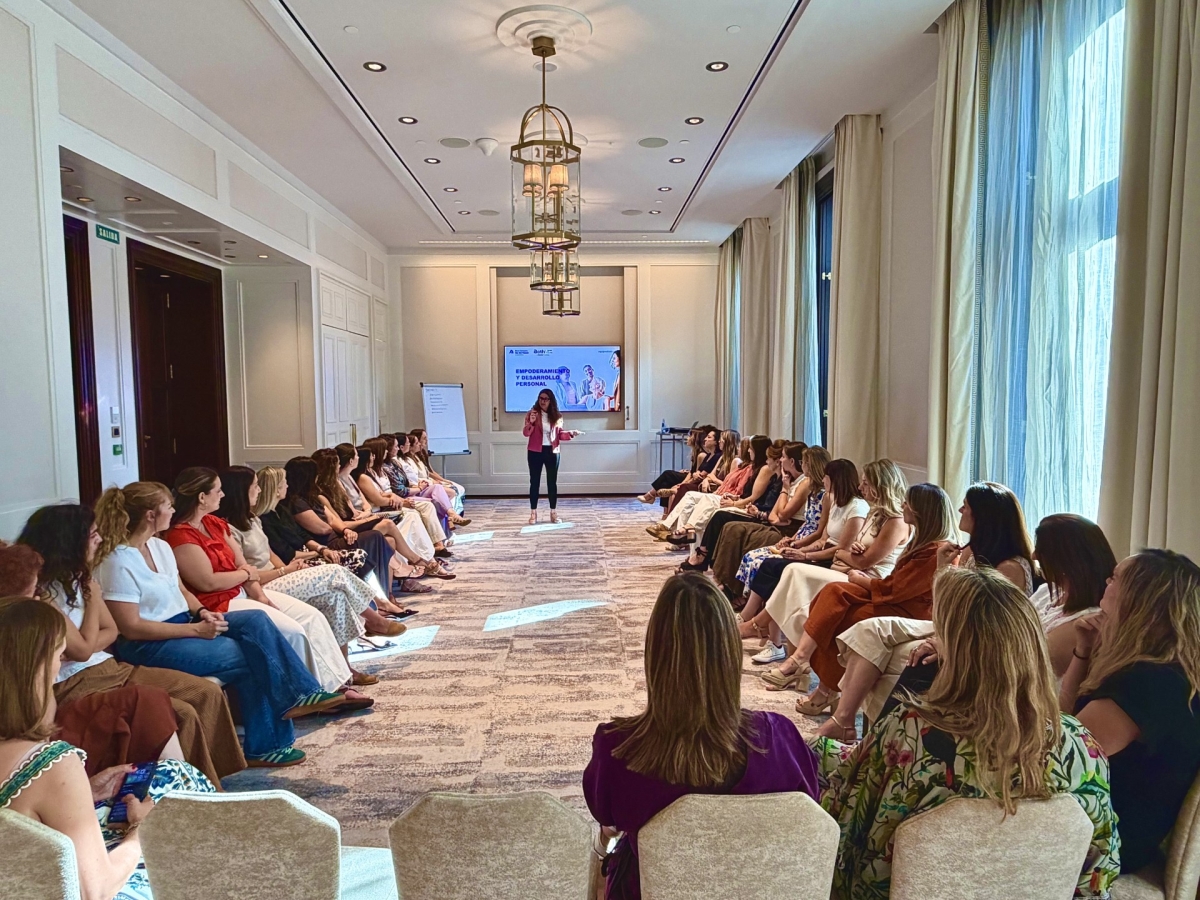
We are often sold the idea of “high performance” as a frantic race against the clock, a marathon of empty productivity where the winner is the one who accumulates the most achievements or produces the fastest. However, during the workshop led by Núria Soler, High Performance in Personal and Professional Life, I discovered that we had stripped this expression of its true soul.
To understand this, it is enough to look at the etymological root of both words. High comes from the Latin Altus, which does not simply mean being at the top of a competitive structure, but rather something that has grown, matured, or developed in depth. Performance, on the other hand, traces back to the Latin Rendere, meaning to give back, restore, or return what has been received.
Therefore, High Performance, in its purest form, is not about speed, quantity, or an end in itself. It is the meaningful act of nurturing something within ourselves and then giving it back to the world transformed, elevated, and expanded.
Starting from this perspective, I asked myself: How can I practice High Performance in my daily life?
1. BEING as a Compass in Times of Immediacy
We live immersed in a world obsessed with Doing and Having. We wake up to endless to-do lists, driven by relentless competitiveness. Yet this workshop reminded me that Being is the true starting point. When your Being is clear, Doing flows naturally and coherently.
This reflection immediately connected me with Viktor Frankl’s book Man’s Search for Meaning. In the dramatic context of a concentration camp, faced with the same horrifying situation, each individual acted in a completely different way. What they held within their Being, their inner purpose, defined their actions and their ability to transcend.
I deeply connected this idea with the speaker’s words about the importance of Self-Leadership. How difficult it is to lead ourselves! Its complexity lies in the humility required to look directly at our weaknesses and embrace our “quirks.” And here lies the key to seeing them differently: those very quirks are what constitute our uniqueness and make each of us truly unique.
The same applies to great athletes and their capacity for self-leadership. Through discipline, effort, determination, sacrifice, and the ability to learn from both success and failure, they reach the goals they set for themselves because each of these concepts holds a different meaning for them. For example, what many of us may see as a sacrifice, waking up at 5:00 a.m. to train, is worthwhile to them because they know it brings them closer to what they want to achieve.
2. The Equation of Talent and Habit Change
This search for purpose led me to the concept developed by Simon Sinek in his book Start With Why, where he introduces his famous Golden Circle theory. Sinek encourages us to ask ourselves WHY we do what we do. During the workshop, this vision took shape through a fascinating equation:
We often convince ourselves that talent is something static, a form of genetic luck. Yet, as Carol Dweck’s research on Growth Mindset shows, abilities are built and developed. High Performance is nothing more than continuous training, a routine of small daily changes that, through consistency, lead to profound transformation.
To achieve this, we must completely abandon the victim mindset. Being a victim means finding excuses in external factors, blaming luck, age, or circumstances. Moving toward Responsibility does not mean carrying guilt; rather, it means developing “the ability to respond to what is required of you when it is needed.”
Many of the ideas shared during the workshop resonated deeply with me, not because they were entirely new, but quite the opposite: because of how familiar they were. We are so immersed in them that we become disconnected from their power, mistakenly assuming that “it’s not for me” or that “it’s just a matter of luck.” We distance ourselves from self-leadership as long as we continue to avoid the responsibility of training ourselves and growing intentionally.
3. Great Teachers: Sport and Nature
If we want to understand responsibility and patient transformation, we need only observe two great mirrors:
- Nature: Every plant demonstrates a process of constant evolution that cannot be accelerated by force. Think of bamboo, which spends years developing roots in darkness before emerging toward the sky. It patiently develops its purpose before revealing its true potential.
- Sport: Athletes are great teachers of human potential. In sport we see the greatness of self-improvement reflected, but also a perfect analogy for our relationships at work and in our personal lives.
Our emotions, beliefs, and the environment in which we operate define each of our actions and shape the way we respond to challenges and difficulties.
4. Leadership as an Act of Service and the Three Pillars of Sport
In the workplace, as well as in our personal relationships, leadership demonstrates an undeniable truth: a team is a faithful reflection of what its leader transmits.
We are often paralyzed by the fear of delegating or by the desire to maintain control. We forget that leadership is not a position of power but an act of service. Every one of us, without exception, is called to lead from wherever we stand. We would move faster and create a greater impact if we applied the three pillars from the world of sport presented during the workshop:
- Focus on Relationships: Understanding that the key to collective success lies in the quality of the relationships we build.
- Trust: Creating an environment where it is safe to be vulnerable, admit mistakes, and ask for help.
- Sense of Belonging: “Wearing the team jersey.” Feeling part of the team, sweating for it, celebrating it, and even grieving with it when necessary. Understanding that we do not always win, but that every “failure” may become our greatest teacher.
The Commitment to Act with Coherence
This High Performance workshop did not seek to change reality through magic, but it reminded me of something truly essential: the importance of acting with coherence, guided by a clear purpose.
It reminded me that from our everyday spaces, whether we lead large organizations or simply manage small daily commitments, we have the power to create a transformative domino effect in our relationships, our dreams, and our life mission. In our professional environment, we have the opportunity to take responsibility for becoming that transformative element; to be the reflection of what we hope to see in others through our own attitudes, integrating Being and Doing, instead of sitting back and waiting for someone else to change before we begin changing ourselves.
Today, the ball is in our court. What small daily action will you begin training today in order to become the reflection of the transformation you wish to see around you?